Piano Solo
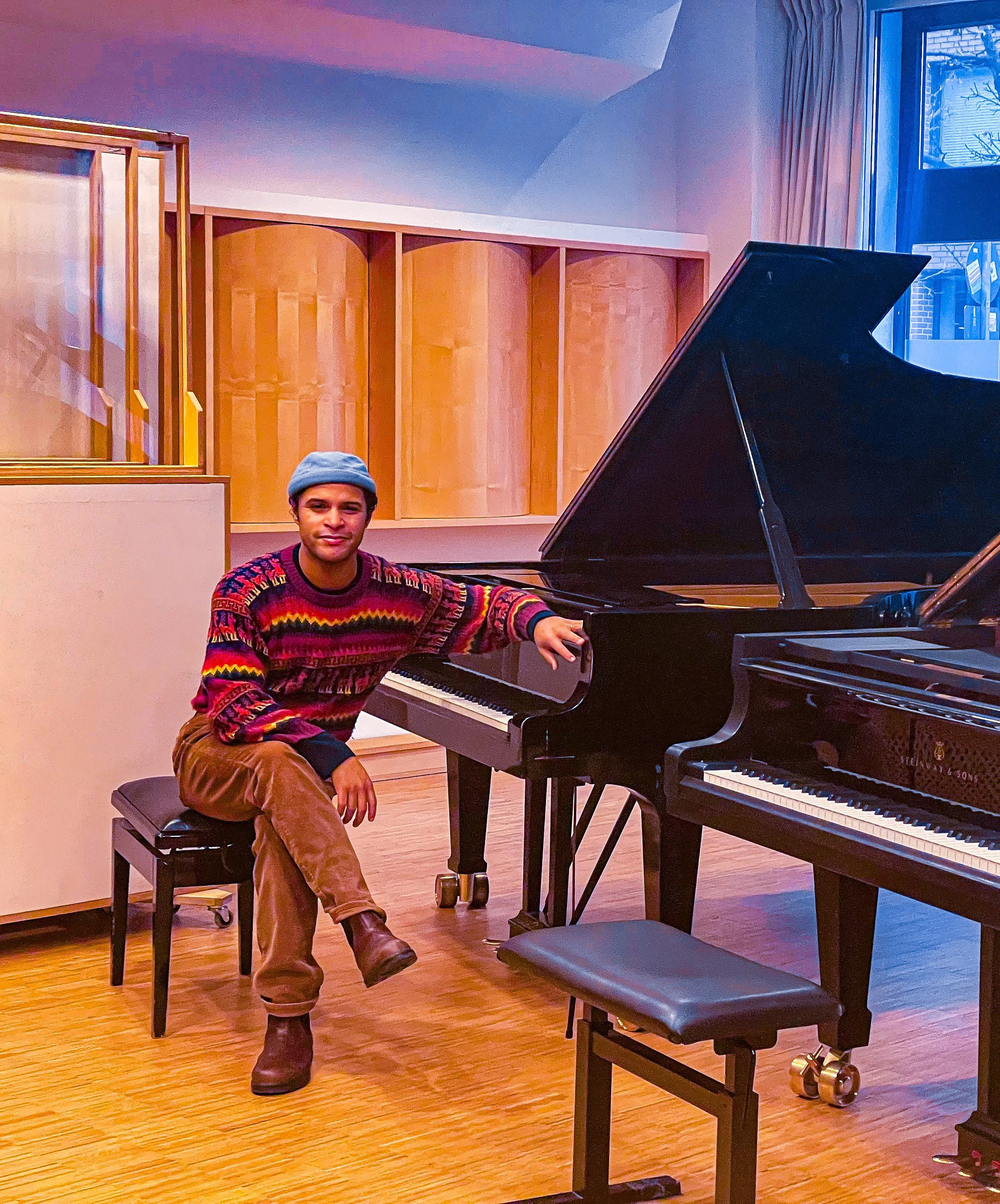
For Leonardo Reyna, the piano has always been more than an instrument. It is a place where thought and emotion begin to take shape — where music becomes a language capable of carrying memory, reflection, and feeling across cultures. His performances seek precisely that encounter: an experience in which listeners are invited not only to admire the craft of the music but to respond with their own emotions. For Reyna, the universality of music lies in its capacity to make us feel — whether the sound emerges from Havana, Vienna, or Buenos Aires.
At the center of his artistic voice lies the rich tradition of Cuban pianism, whose rhythmic vitality, timbral imagination, and expressive character form a vital thread in his repertoire. Alongside it stands a broader Latin American tradition that Reyna approaches with the same seriousness afforded to the great European canon. Composers from the region — whose works remain too rarely heard on international stages — occupy an important place in his programs, where they appear not as curiosities but as voices deserving the same level of artistic commitment and interpretive depth as any established master.
Reyna’s early formation was shaped by remarkable mentors. His mother, the pianist Alejandrina Reyna, instilled in him a profound understanding of tone, pedaling, and the physical relationship between the body and the instrument — lessons that traced their lineage through generations of pianists connected to the great nineteenth-century tradition. Her influence remains a constant presence in his playing, even across the distance of continents.
Another decisive figure was the Chilean pianist Roberto Bravo, with whom Reyna began working as a young teenager after leaving Cuba. Through Bravo — a pianist deeply influenced by the tradition of Claudio Arrau — Reyna encountered an approach to piano technique based not on force but on relaxation, weight, and the search for a deep, rounded sound. Yet the most enduring lesson was perhaps not purely musical. Bravo’s belief that the musician’s role extends beyond the pursuit of applause — that music can serve communities and speak to broader human concerns — left a lasting mark on Reyna’s artistic outlook.
At thirteen he made his orchestral debut performing Piano Concerto No. 21 in C major by Wolfgang Amadeus Mozartwith the youth symphony orchestra of La Serena, Chile — a country that had become his new home after leaving Cuba at the age of ten. In those early years he traveled widely through Chile performing in places as varied as hospitals, prisons, copper mines, and concert halls, experiences that reinforced the idea that music belongs to every corner of society.
His studies later continued across Latin America and Europe, with formative encounters that broadened his musical horizon. Europe in particular left a profound imprint on his understanding of the classical repertoire — confirming, as one of his teachers once told him with a smile, that Beethoven might only be fully understood after feeling the cold of a German winter.
Today Reyna’s solo repertoire moves freely across traditions and eras: from the structural power of Ludwig van Beethoven to the poetic intimacy of Frédéric Chopin, from the luminous colors of Claude Debussy and Maurice Ravelto the expressive worlds of Sergei Rachmaninoff and Sergei Prokofiev. Spanish and Latin American composers such as Isaac Albéniz, Heitor Villa‑Lobos, and Alberto Ginastera also appear frequently in his programs, reflecting a repertoire shaped by both heritage and curiosity.
Despite this wide landscape of influences, Reyna often describes the experience of playing in simple terms: a moment of transformation. When he sits at the piano, the restless energy of everyday life gives way to a different mental state — one in which the performer becomes a conduit for something larger than himself, shaping the musical message as it unfolds in real time.
His recital programs are rarely fixed formulas. Instead, they evolve with the moment — guided by intuition, by spiritual atmosphere, and by the belief that music itself was often born from deeply human circumstances: moments of reflection, struggle, devotion, or change.
Reyna’s upcoming solo recording, devoted to the complete 24 Preludes, Op. 28 by Frédéric Chopin, was recorded at Emil Studios in Berlin